
The real operator problem is not just the miss
Key takeaway
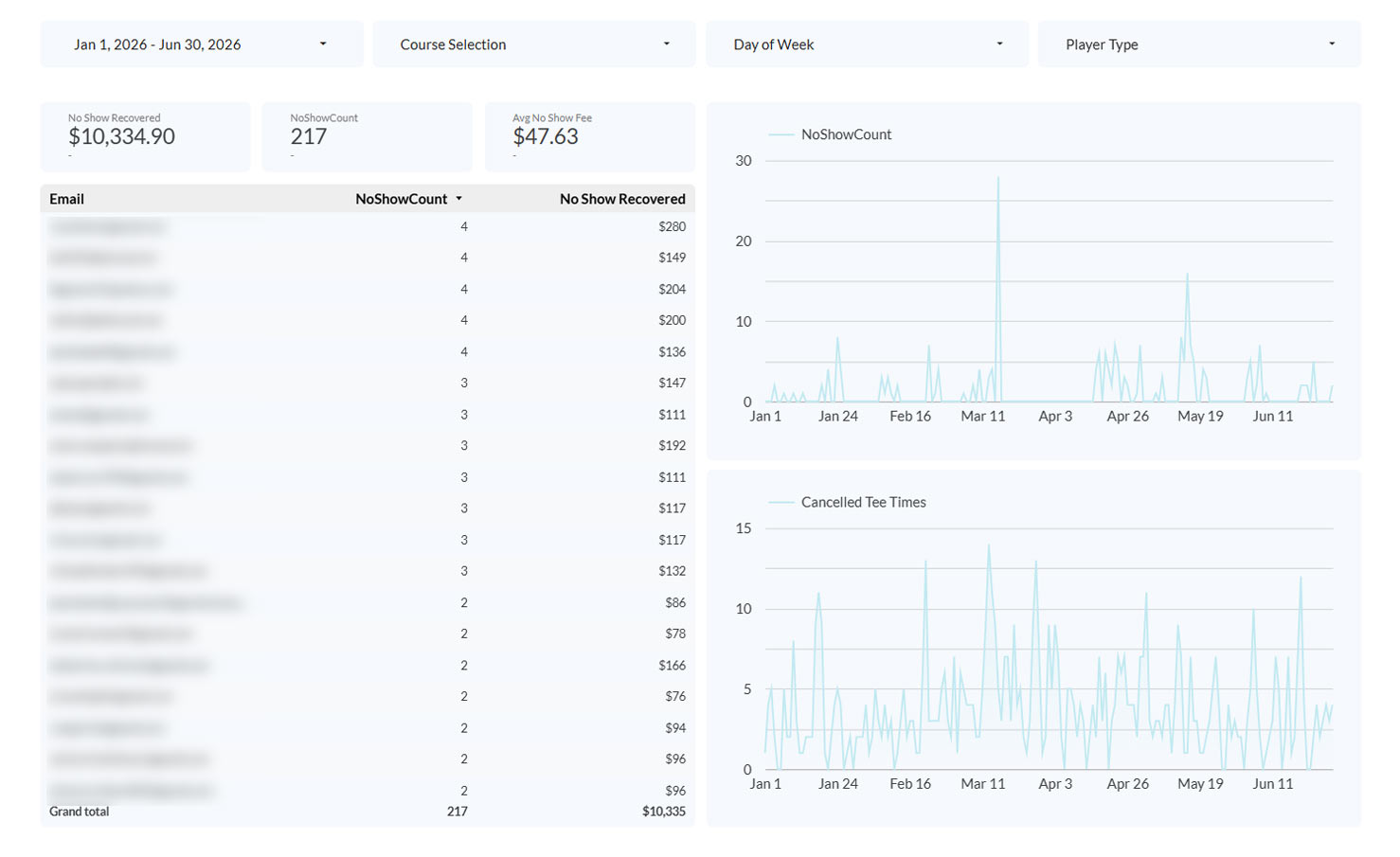
The harder problem is protecting tee times without making booking harder.
Most operators already know no-shows cost money. The tension is figuring out how to protect revenue without forcing deposits on every golfer, slowing down booking conversion, or pushing more stress onto the golf shop staff.
When the course lacks a clear process, the team is left improvising. Staff has to explain empty spots on busy days, starters have to deal with uneven groups, and management has to decide whether to absorb the loss or enforce a policy that may feel inconsistent. That is why no-show protection is not only a fee issue. It is also an operations issue, a booking confidence issue, and a direct revenue issue.
Why most no-show policies feel like a tradeoff
Many courses feel stuck between two weak options: protect revenue with more checkout friction, or keep booking easy and absorb the losses.
Deposits and full prepayment can make sense in some environments, but they can also create hesitation for golfers booking a casual weekday round, dealing with uncertain weather, or reserving for a group. For many courses, the direct booking path works best when it stays simple. The problem is that simple booking can feel risky if the course has no strong way to reduce preventable misses or respond fairly when golfers do not show.
Key takeaway
GolfBack's point of view is that no-show protection should not depend on making checkout feel heavier.
The better answer is to protect tee time value with clearer communication, fair fee recovery, and a cleaner workflow for staff while still allowing golfers to book without a deposit-heavy experience.
Operator checklist
What operators actually need
A booking path that stays simple for golfers.
Clear expectations before the reservation is made.
Better prevention before the tee time arrives.
Fair recovery when golfers no-show or short-show.
A consistent process that does not leave the shop staff scrambling.
How GolfBack solves the no-show problem
GolfBack No-Show Protection is built around a simpler idea: prevent what you can, recover revenue fairly when you need to, and make the workflow easier on the course team.
Operator checklist
The GolfBack no-show protection approach
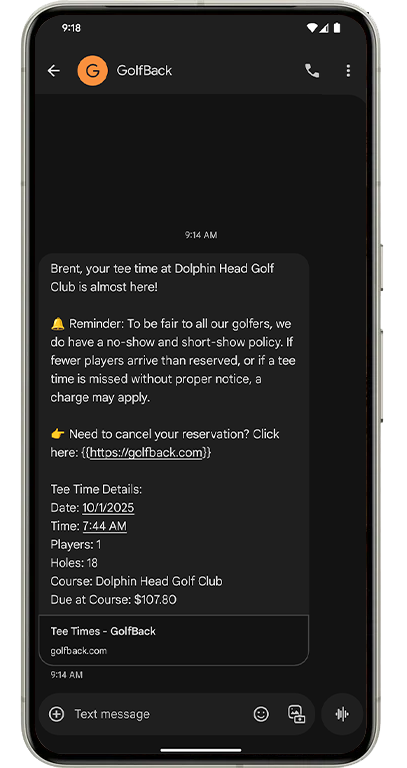
Reduce preventable no-shows with automated SMS and email reminders.
Make the policy clearer before the round so golfers know what to expect.
Recover revenue fairly when players no-show or short-show.
Avoid forcing deposits or full prepayment at checkout.
Give staff a cleaner process to review missed players and apply the policy.
That approach matters because most no-show losses are not solved by a harsher checkout page. They are solved by better communication before the round, a fair response when the golfer still misses the time, and a system that helps the course act consistently instead of starting from scratch every time something goes wrong.
Why this fits the bigger GolfBack system
GolfBack does not treat no-show protection as a disconnected policy tool. It fits into the larger system of helping courses get booked direct, protect revenue, and build stronger golfer relationships.
If your course is investing in direct demand through its website, booking engine, email marketing, pricing strategy, and Google visibility, then no-show protection should reinforce that effort, not work against it. A direct booking is more valuable when the course can trust the reservation, communicate with the golfer, and recover revenue more fairly if the player does not arrive.
- A stronger Golf Booking Engine helps more golfers complete direct reservations.
- Dynamic Pricing helps protect prime-time value and manage softer demand windows.
- Email Marketing and reminders help reduce preventable misses and drive repeat play.
- Reserve with Google helps keep high-intent Google demand connected to the course-owned booking path.
- No-Show Protection helps the course keep more of the value from the demand it already earned.
See the connected GolfBack tools
No-Show Protection
See how GolfBack helps reduce preventable missed rounds and recover revenue fairly.
Golf Booking Engine
Explore how a cleaner booking path helps more golfers finish direct reservations.
Dynamic Pricing
Protect high-demand value and manage softer inventory more intentionally.
Email Marketing
Use follow-up and reminder communication to support repeat play and booking accountability.
Reserve with Google
Keep high-intent Google demand connected to your direct booking channel.
What to review at your course right now
Operator checklist
Operator review questions
How often do no-shows or late cancellations reduce revenue at the course?
Are policies clear before a golfer books?
Can staff identify who made the reservation and what happened?
Do golfers receive reminders early enough to adjust plans?
Is the no-show workflow applied consistently across the team?
Are repeat offenders handled fairly and predictably?
Is the course protecting revenue without creating unnecessary booking friction?
Those questions help operators evaluate whether they are simply reacting to missed tee times or actually managing them. The best system protects inventory, supports staff, and keeps the golfer experience reasonable.
Protect tee time revenue without adding more friction
No-shows will never disappear completely. Weather changes, groups shift, and real life still gets in the way. But courses do not have to accept those misses as a fixed cost of doing business or respond by making every golfer jump through more hoops to book.
That is what makes the article's core point simple: the best no-show strategy is not just stricter policy. It is a better operator system. When the course can prevent more misses, respond fairly when they happen, and avoid deposit-heavy friction at checkout, tee time protection starts working for both the operator and the golfer.
No-Show Protection
Protect tee time value without adding booking friction.
GolfBack helps golf course operators reduce preventable missed rounds, recover revenue more fairly, and keep direct online booking simple for golfers.
Talk to GolfBack