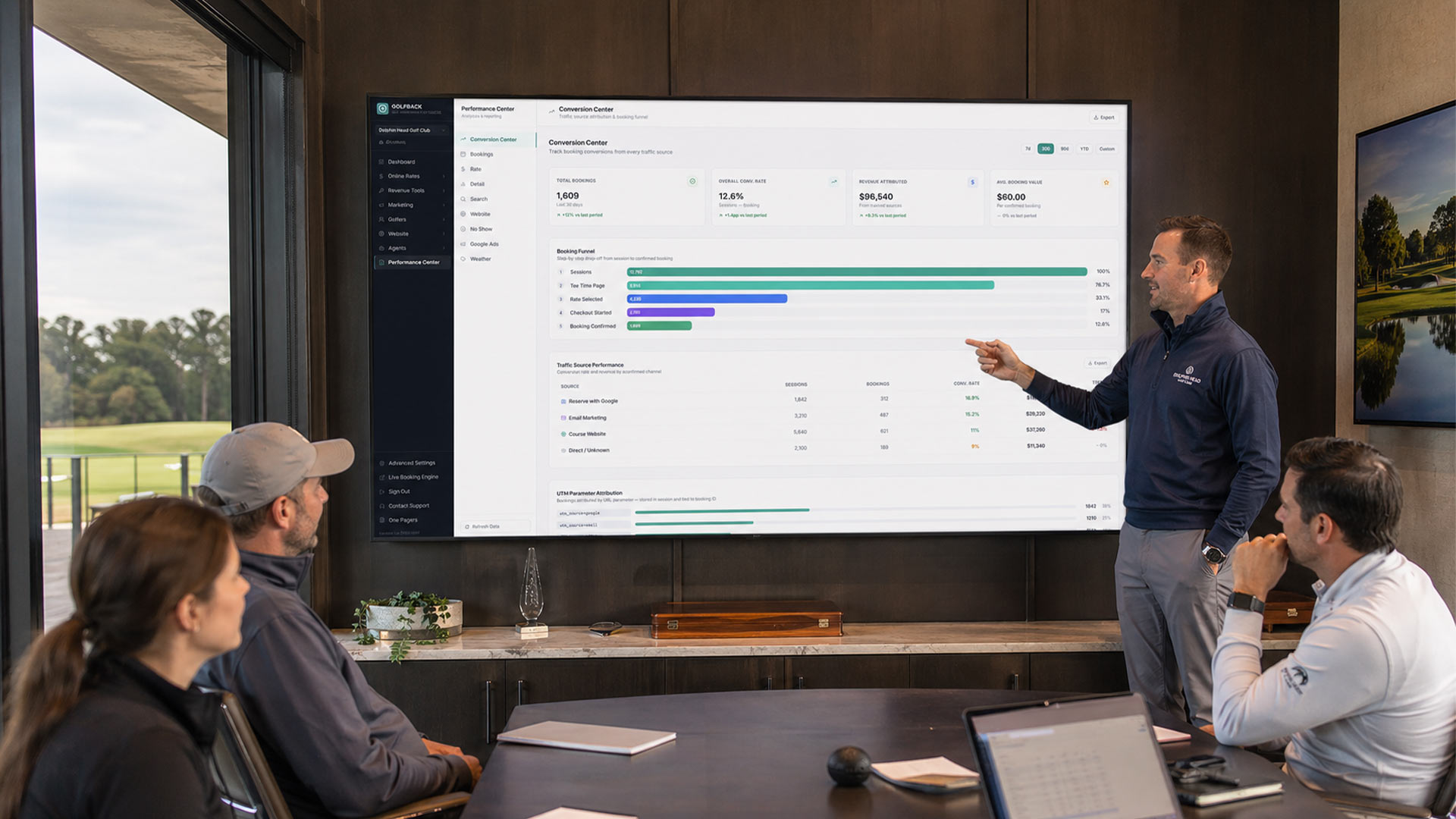
1. Track the behavior that drives bookings
Your tee sheet is not just a schedule. It is a window into how golfers value your product.
By identifying booking patterns, courses can move from one-size-fits-all pricing to a strategy that reflects real demand and real-time intent.
- Booking window
- Preferred day and time
- Play frequency
- Rate type used
- Average booking value
Product connection
GolfBack organizes golfer behavior across your booking ecosystem.
GolfBack collects and organizes behavioral data across the tee sheet, POS, and booking engine for segmentation, pricing, and automation.
Explore Dynamic Pricing2. Segment golfers to personalize pricing
Not all golfers behave or spend the same way.
By segmenting customers by booking behavior, play frequency, value, and preferences, courses can apply more targeted pricing and promotions that feel relevant to each golfer.
- One-time players
- Frequent players
- Last-minute bookers
- High-value golfers
- Time-of-day preference segments
- Seasonal or weekend-only golfers
Segmentation helps marketing and pricing feel less generic, which can improve engagement and increase revenue per round.
3. Respond to real-time demand on your tee sheet
Tee sheets do not sell evenly across every day, hour, or weather condition.
When demand spikes or softens, pricing should respond. High-demand hours can support premium pricing, while late-fill or undersold tee times may need smart incentives.
- High-demand hours can support premium pricing.
- Late-fill or undersold tee times can use timely incentives.
- Weather shifts can change booking behavior quickly.
- Live booking activity can reveal urgency.
- Last-minute demand can create upsell opportunities.
4. Automate adjustments without losing control
Dynamic pricing should not mean giving up control of your rates.
The best pricing automation uses rules the operator defines. Courses can set conditions around utilization, daypart, weather, golfer segment, and timing, then let the system monitor and apply changes.
Operator checklist
Example automation rules
Raise prices when Saturday morning reaches 70% booked.
Lower public rates if a weekday afternoon stays under 30% booked.
Apply a weather-based discount when rain is forecast.
Create a flash deal for one-time players who have not returned.
Operators can pause, modify, or layer automations at any time. The goal is to work smarter while still preserving pricing strategy and brand control.
5. Measure, refine, and repeat
Even the smartest pricing strategy needs oversight.
Markets change, demand fluctuates, and golfer behavior evolves. Courses should regularly review fill rate, repeat play, promo performance, and segment behavior to refine pricing decisions.
- Identify underperforming time slots and apply targeted incentives.
- Raise rate ceilings when a segment consistently books far in advance.
- Introduce loyalty upsells when repeat players start to fade.
- Test new messaging if a promo code underperforms.
Final takeaway: turn golfer behavior into revenue growth
Your tee sheet is a dynamic, data-rich asset that shows what golfers value and where revenue opportunities exist.
- GolfBack dynamic pricing tools adapt to demand patterns.
- Behavioral segmentation targets the right golfers with the right offers.
- Automated promotions and pricing rules reduce guesswork.
- Built-in reporting shows what is working so operators can keep optimizing.
Key takeaway
The result is a smarter way to run the golf business.
More direct bookings, higher revenue per round, less manual work, and better pricing decisions built around real golfer behavior.
GolfBack Revenue Tools
Use pricing, automation, and golfer data to grow smarter.
GolfBack helps operators use real booking behavior, demand signals, and automated marketing to improve revenue without adding more manual work.
Talk to GolfBack